.webp)
“AI is transforming classrooms.” “AI is the future of education.” “Generative AI is already everywhere.”
Whenever the conversation turns to education and technology, it inevitably shifts to AI. And it’s not undeserved: AI is everywhere, and AI can do a lot for educators and students alike.
But that doesn’t mean AI is the only technology trend worth talking about. Digital credentials, immersive learning, sustainability, and cybersecurity are also on the agenda.
Here’s our top 10 technology trends in education worth paying attention to in 2026.
1. AI Is Powering Hyperpersonalized Learning for Every Need
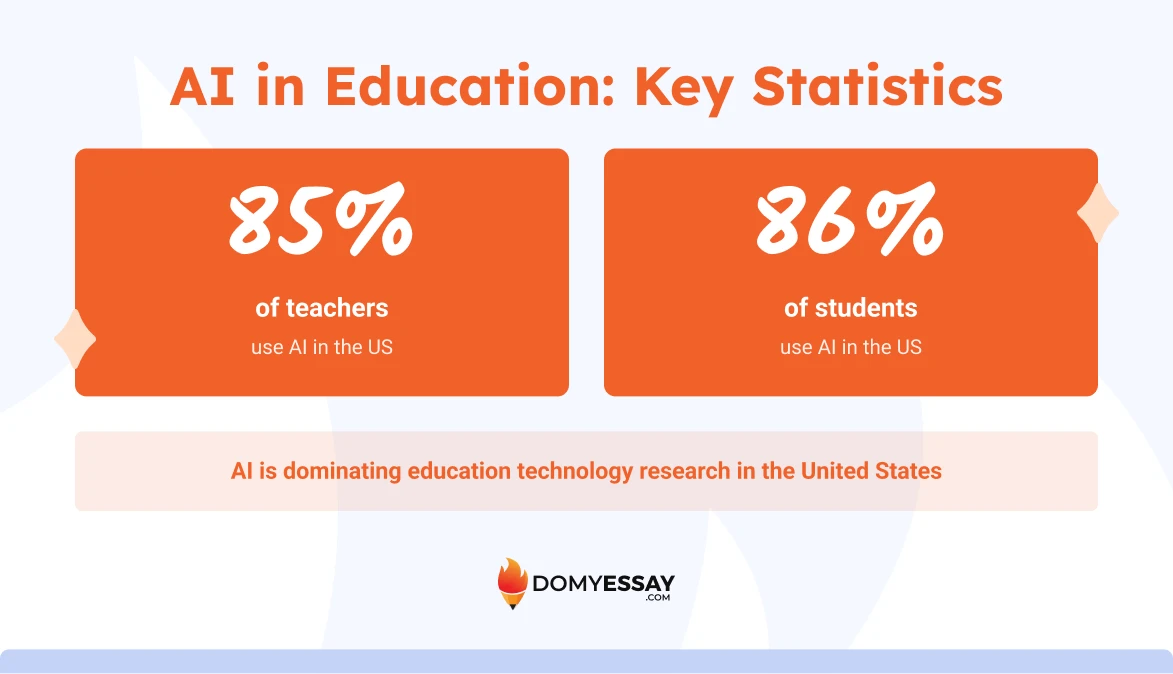
Yes, we began this article by saying that AI isn’t the only technology worth talking about, but we’d be amiss if we didn’t mention it at all. AI is dominating education technology research; 85% of teachers and 86% of students report using AI in the United States.
What made AI so popular? The jury is still out, but we’d argue the technology’s multifaceted capacity to personalize learning has played a key role. That applies to:
- Learning materials
- Difficulty and pace in online learning
- Feedback on assignments and tests
- Academic support and recommendations
As the OECD points out, however, AI isn’t a replacement for human teaching; it’s an augmentation. Teachers should maintain their agency even when AI is involved.
2. VR, AR, & MR Bring Immersive Learning to the Classroom
What if you could learn to perform surgery without a single risk? That’s one of the many promises of extended reality (XR) technologies:
- Virtual reality (VR) equals full immersion into a simulated environment (e.g., operating theater).
- Augmented reality (AR) overlays digital artifacts over a real-world environment.
- Mixed reality (MR) superimposes digital elements onto the real world and also allows you to interact with them.
Virtual simulations and labs are great for one reason: they let students fail safely and without fear. That’s why they could be prime for high-stakes practice; think medicine or engineering.
XR is one of the emerging technologies in education, but several studies have demonstrated its benefits. Students show higher engagement, understand complex concepts more easily, and even perform better.
3. Microcredentials & Digital Badges Are Gaining Traction
Long gone are the times when you absolutely had to complete a years-long program to acquire career-oriented skills. Today, you can have your competency in a skill recognized via a digital badge or a microcredential:
- Digital badges can be issued by virtually anyone: a learning platform, a tech company like Google or Amazon, a job search site, a freelancer marketplace.
- Microcredentials are issued by an educational institution or organization and, therefore, have to meet a more stringent set of standards.
Both digital badges and microcredentials are faster to acquire and target narrow skills, and that’s what makes them so coveted. They can facilitate upskilling and reskilling, help learners develop career-oriented skills, and support lifelong learning.
Of course, digital badges and microcredentials can’t completely replace traditional degrees, especially in fields like law, healthcare, or engineering. Instead, they help job seekers stand out and adapt to evolving employer expectations.
4. Hybrid & Flexible Learning Is Maturing
The lockdowns made distance learning a necessity. Half a decade later, students prefer it to in-person instruction, at least, from time to time. Almost a third (28%) of college students would rather opt for hybrid learning, a mix of face-to-face and online instruction.
Hybrid learning offers one critical thing: flexibility. Students can study at their own pace (async learning) or attend lectures from the comfort of their rooms (sync learning). They can access course materials on any device, anywhere. They can integrate studies into their existing schedule, which is great for international and working students.
Schools like Columbia University already offer hybrid/flexible learning on par with traditional instruction. That’s not new. What’s new is that we’re seeing them come to terms with the fact that tools alone aren’t enough for hybrid learning to actually work. Instructors have to design online and offline experiences to complement each other.
5. AI Helps Teachers Adapt with Learning Analytics
Imagine receiving an alert that a student is likely struggling before they even think to approach you. Predictive and prescriptive analytics, both AI-powered technologies, can make it possible:
- Predictive analytics forecasts academic performance and identifies struggling students early on.
- Prescriptive analytics suggests the next best action for helping students overcome their specific challenges.
Both types of learning analytics do something human educators can’t: they make sense of torrents of data students generate during their studies.
On the flip side, even if college students are more comfortable with universities using their data than Amazon, they’re still worried about third-party data sharing. That’s why transparency is a must. Using minors’ data for learning analytics, in turn, has to comply with regulations like FERPA.
6. Digital Certificates Are Facing a Verification Challenge
The fake degree industry — diploma mills, identity fraud, contract cheating — has always existed. Technology in education (namely, digital certificates) used to be the solution. Now, they’re becoming part of the problem.
Without proper precautions on the issuer’s side, digital certificates are easy to fake. All you need is a sample and a prompt. That’s why verifiable certificates are gaining ground: they allow anyone to check the certificate’s authenticity via a unique URL or cryptographic signature.
Blockchain, or distributed ledger technology (DLT), has the potential to secure digital certificates even further. Its advantage? The ledger is immutable and doesn’t require a designated third party to ascertain the record’s authenticity.
As coveted as verifiable credentials are, there’s more than one standard (Open Badges 3.0, W3C Verifiable Credentials, TrustVC, etc.). That creates an interoperability challenge.
7. AI Tutors & Agents Are the New Black
Chatbots aren’t the most advanced AI tool out there anymore. That title goes to AI agents.
Yes, genAI chatbots can create quizzes, lesson plans, and learning materials based on a prompt faster than you can say “please.” But AI agents can autonomously perform multi-step tasks to achieve the goal laid out in the prompt. For example, they can search the internet and interpret data.
In education, AI agents can:
- Offer proactive academic support to students who need help
- Adapt learning pathways to every student’s unique needs
- Provide one-on-one study assistance (think AI tutors and course-specific study buddies)
Of course, there’s an important asterisk here: AI can get things wrong. Besides, overrelying on AI can leave students less capable of thinking critically and solving problems independently.
8. Sustainability Isn’t Negligible Anymore
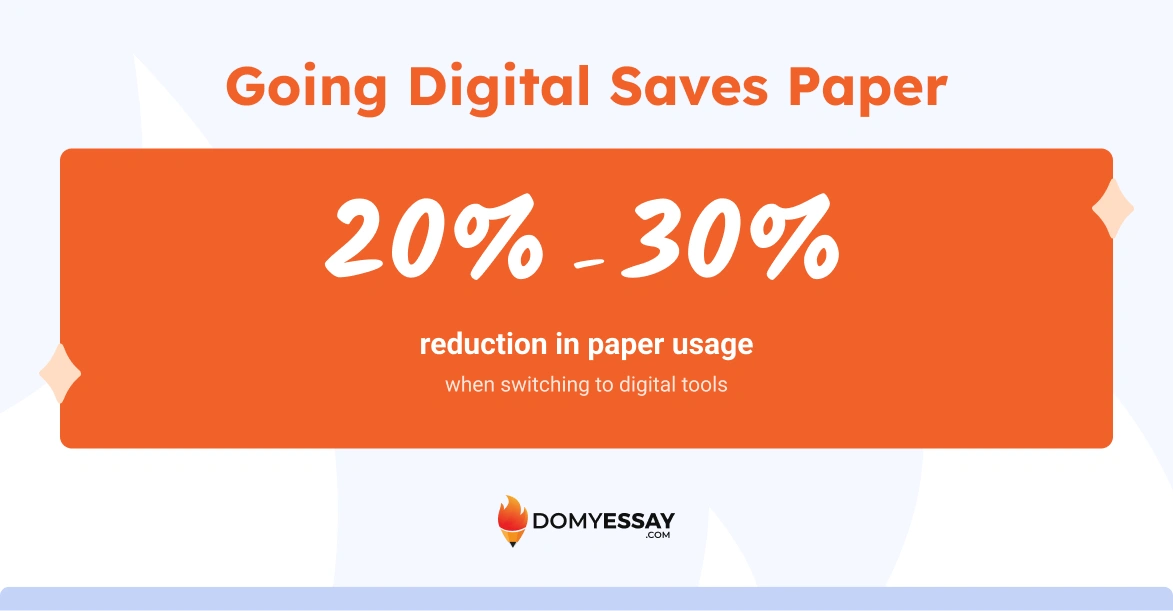
Switching to digital tools can reduce paper usage by 20% to 30%, but going paperless isn’t the only way technology can help schools and colleges reduce their carbon footprint. For example, with hybrid learning, students don’t need to commute to campuses, which lowers emissions.
That said, 2026 may be the year of reckoning for technology’s impact on the environment. And some impact it is:
- Cloud has a greater carbon footprint than the whole airline industry, while data centers consume more electricity than some nation-states.
- AI infrastructure propels data centers’ electricity and water consumption, with the UN estimating that just one AI service consumes hundreds of gigawatt-hours of electricity a year.
- E-waste from obsolete or broken hardware amounts to an estimated 62 million tonnes a year, and only 22.3% of it is collected and recycled.
9. Platforms Enable Social Learning Online
Social learning is a simple idea: learning from and with others. Today, learners can use platforms and tools to learn from and with their peers without setting foot outside. For example:
- Peer-to-peer learning platforms let learners impart their knowledge and discuss it with others.
- Collaborative tools (e.g., Google Docs) facilitate working on group projects.
- LMSs and online course platforms put social features in place to foster conversation.
- Course communities offer forums for discussing topics and providing feedback.
When used right, social learning tools and platforms counteract the common side effect of online learning: isolation. However, instructors have to get involved to foster a real learning community. Again, tools alone aren’t enough.
10. Cybersecurity Remains a Responsibility — and a Challenge
In the United States, cybersecurity is the number one preoccupation for education technology leaders. What’s more, 65% say they lack cybersecurity staff and dedicated budget to navigate mundane and emerging threats.
In August 2026 alone, cyberattackers locked 42,000 students out of UT San Antonio’s systems, disrupted Oceanside school district’s systems, and delayed two fall terms at Brazosport College.
Strong password enforcement and multi-factor authentication are good first steps, but technology leaders can’t call it a day once these measures are in place. Securing systems and data also requires:
- Assessing and mitigating third-party vendor risks (including AI tools)
- Educating staff on phishing and account compromise attacks
- Regularly backing up data to counteract possible ransomware attacks
- Establishing AI governance frameworks to prevent irresponsible or shadow AI use
In Closing
The days of wondering “Is there a tool or technology we could use?” are over. Educators, institutions, and students all know the technology is there. Today’s pressing question is, “How do we use technology responsibly and effectively?” Many of these 10 technology trends in higher education and beyond illustrate this inflection point.