
Whenever you sacrifice sleep to study, reach for junk food, or spend hours sitting in front of the laptop, you might think you’re doing what’s necessary to earn good grades. The reality is, you might be shooting yourself in the foot.
None of these behaviors are great for your cognitive health. So, you may find it harder to retain what you’ve learned, recall it during tests, or build on it in the following semesters.
But what is cognitive health, exactly? In short, it’s your ability to think, learn, focus, make decisions, and remember. Here’s how your sleep, diet, stress management, and physical activity levels can all impact it.
Why Is Cognitive Health Important for College Students?
When you’re a student, cognitive health helps you keep a sharp mind throughout your studies. If you take care of it, you’ll find it easier to:
- Learn and retain new information
- Concentrate during lectures and assignments
- Complete lengthy, complex assignments
- Make decisions to organize and prioritize tasks
Of course, if you find it difficult to stay focused one evening, that doesn’t mean you have a cognitive disorder. It could mean you need to get enough sleep to help your brain do its best, though.
Unfortunately, the archetype of a constantly stressed-out student isn’t fiction. In the U.S., a third of college students (35.8%) name stress as an impediment to their academic success. That’s no surprise: high or prolonged stress is linked to poorer attention, explicit memory, and executive control.
Why Sleep Is Important for Cognitive Health
Sleep is that magic time when your brain gets rid of waste products and repairs your systems. If you don't get enough of it, that undermines everything from emotional regulation and interpersonal interactions to attention, executive function, and memory.
In fact, you definitively commit new skills and information to memory while you’re asleep. During non-REM sleep, your brain consolidates declarative memories (facts, figures, names, etc.). REM sleep, in turn, reinforces procedural (skill) memories.
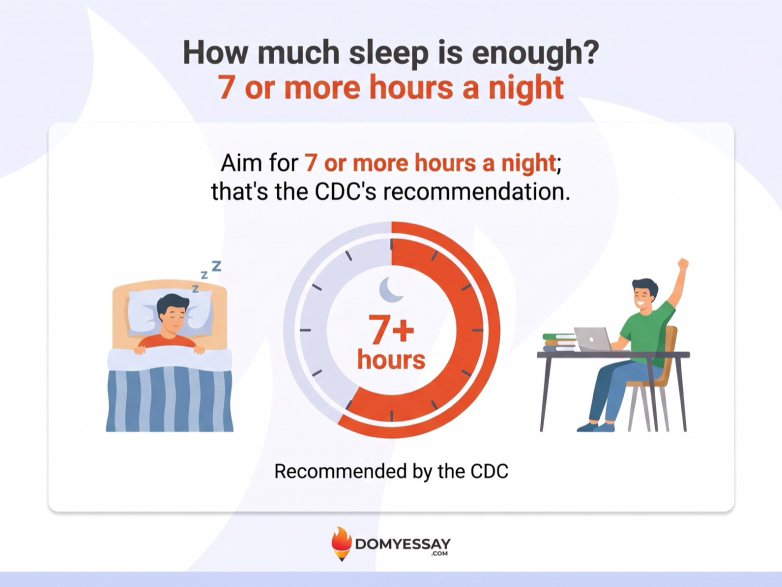
So, how much sleep should you get? Aim for 7 or more hours a night; that’s the CDC’s recommendation. But remember: sleep quality matters as much as its quantity.
Here are the tenets of proper sleep hygiene:
- Maintain a regular, consistent sleep schedule
- Don’t sacrifice sleep for last-minute exam prep
- Avoid drinking coffee or energy drinks in the afternoon and evening
- Keep your bedroom comfortable, quiet, and cool
- Avoid screen time 30 minutes before your bedtime
How Does Physical Activity Help Cognitive Health?
Physical activity gets blood pumping to your brain. That, combined with hormones released during exercise, has benefits for your cognitive health:
- Short-term: Reduced feelings of acute anxiety and improved sleep after a single bout of moderate-to-vigorous activity
- Long-term: Reduced anxiety, improved sleep, better mood, and improved mental processing speed, memory, and executive function
Staying physically active doesn’t mean you have to make going to the gym your second job. You just need to dedicate 150 minutes a week to moderate activity like cycling or brisk walking. The CDC also recommends doing muscle-strengthening exercises at least twice a week.
Here’s how to stay physically active while you’re a student:
- Go for the stairs whenever you get a chance
- Walk or cycle to and around the campus
- Go to the campus gym (chances are, it’s free!)
- Join a student club for swimming, dancing, hiking, or other activities
How to Support Cognitive Health Through Diet?
You are what you eat, and what you eat becomes nutrients for your brain. But your brain is quite capricious: it needs a whole lot of different nutrients to do its job well.
One large-scale survey found a link between diet and cognitive performance. Those who stuck to a balanced diet, an everything-in-moderation approach with low processed food intake, scored the highest on cognitive functions.
Another systematic review looked into the link between the Mediterranean diet and cognitive health. While results are still open to interpretation, this diet may improve episodic and working memory.
Whether or not you decide to give the Mediterranean diet a go, what matters more is your eating habits. Keep them healthy by:
- Maintaining a consistent eating schedule without skipping meals
- Limiting sugars, salts, and saturated fats
- Eating fruits and vegetables
- Staying hydrated throughout the day
- Keeping your meals well-rounded and balanced
Why Stress Management Is Crucial for Focus & Memory
Chronic stress is the long-term, prolonged kind that you experience day in and day out, and it’s the real danger to your cognitive health. It can lead to:
- Sleep problems
- Concentration and memory issues
- Anxiety and depression
- Mood swings
- Headaches
- Chronic fatigue
Of course, students have plenty of reasons to feel stressed. You’re on your own for the first time, and you feel the pressure to get good grades, meet deadlines, and pass exams. Finances can also be an important stressor, as can juggling studies and work.
Good news: you can learn to manage stress. Here’s where to start:
- Plan ahead to prevent deadline-related stress
- Stay physically active: take a walk, go cycling, etc.
- Make time for leisure
- Practice relaxing techniques (meditation, yoga, breathing exercises)
- Get enough sleep
- Stick to a healthy diet
- Consider saying “no” to things that stress you out
Use It or Lose It: Keep Your Mind Sharp Through Learning
The human brain is a collection of neural connections (synapses). The ones that get used repeatedly stay in place and get reinforced. The ones that don’t are lost over time.
Forgetting isn’t necessarily a bad thing. But the more connections you lose, the harder it is to keep your cognitive functions running at their peak.
Luckily, there’s a simple solution: keep learning! It’ll help you improve neuroplasticity: the brain’s ability to adapt to new circumstances and take on new challenges.
To boost neuroplasticity, keep your learning adventures diverse. Dabble in a new musical instrument, try out a foreign language, or study a subject that’s in no way related to your major or minor. Sign up for classes on campus, or go to the library and pick up a book on a topic you know nothing about.
What are the Best Habits for Cognitive Health?
Before we wrap it up, let’s recap the five strategies for keeping your brain fit:
- Get enough quality sleep and maintain a consistent sleep schedule
- Foster healthy eating habits and stick to a balanced diet
- Learn to manage stress and avoid it where necessary
- Stay physically active throughout the week
- Keep your brain engaged by learning something new
Of course, these are just the essentials. If you want to go deeper, we have five more habits you might want to develop:
- Interact with friends and stay socially active
- Quit smoking if you do
- If you drink, do it in moderation
- Consider volunteering
- Set aside enough time for hobbies
Looks like a major life change? Don’t worry: you don’t have to reinvent your lifestyle in one go. Focus on one thing at a time if it makes things easier; just start with the one that you think needs improving the most.
In Closing
When something goes wrong with your body, you feel pain or other hard-to-ignore physical symptoms. But if you don’t take care of your cognitive health, the payback is more subtle: poorer memory, attention, or concentration.
You might be used to burning the candle at both ends or grabbing a bite whenever, but trust the science: healthy lifestyle habits can actually make you a more apt learner.