
Roughly a third of U.S. students struggle with depression and anxiety, according to the most recent Healthy Minds report. What’s more concerning is that the prevalence of depression symptoms among all college students has been steadily rising over the past 15 years.
All of this means one thing: the resources put in place aren’t enough to reverse that trend. Yet, optimism is emerging as a promising way to prevent mental health challenges in students.
Here’s how optimism and mental health go hand in hand and how to develop it.
Statistics of Mental Health in College Students: Where We Stand
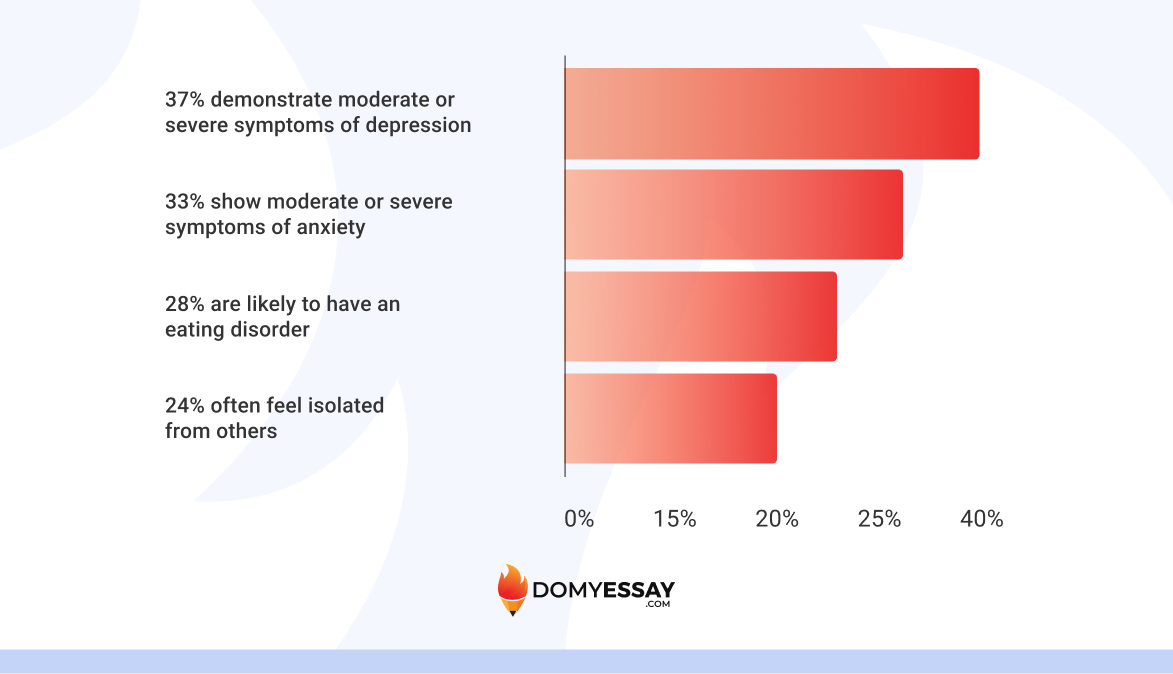
Every year, the Healthy Minds team surveys tens of thousands of U.S. students across 100+ colleges and universities to collect data on mental health issues in college students. The 2024-2025 data, for example, is drawn from a sample of 84,735 students from 135 institutions. Here’s what it says about the state of mental health among college students:
- 37% demonstrate moderate or severe symptoms of depression
- 33% show moderate or severe symptoms of anxiety
- 28% are likely to have an eating disorder
- 24% often feel isolated from others
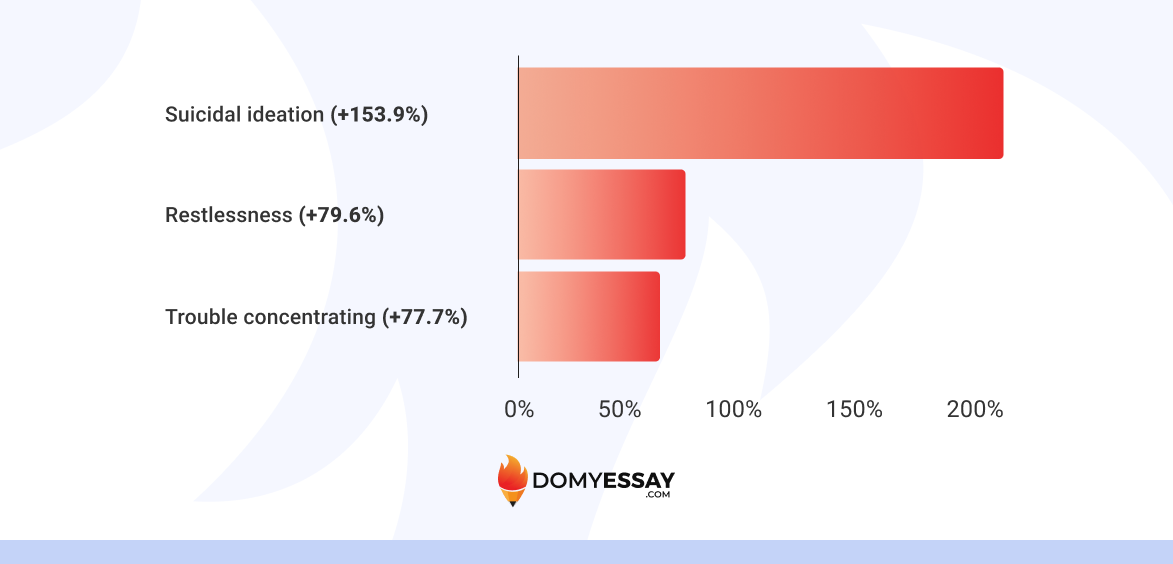
A recent Johns Hopkins study paints a more concerning picture. Based on the researchers’ analysis of health survey data for 560,000+ US students, the prevalence of all depressive symptoms increased between 2007 and 2022, including:
- Suicidal ideation (+153.9%)
- Restlessness (+79.6%)
- Trouble concentrating (+77.7%)
How Does Mental Health Affect College Students?
In the Health Minds survey, only 33% of students said that mental or emotional difficulties hadn’t impacted their academic performance within the past four weeks. The Spring 2025 National College Health Assessment corroborates those findings, showing that stress in college students negatively impacts their academic performance in 35.8% of respondents.
But it’s not just academic performance that can take a hit. Emotional stress and personal mental health are the leading reasons why students consider dropping out. And, of course, long-term mental health struggles can negatively impact relationships, overall well-being, and life outcomes.
What is Optimism in Psychology, Exactly?
Put simply, optimism is a “glass half full” mindset. Optimists tend to believe that good things will happen and don’t dwell on past hardships or failures. How you explain events in your life is usually a good predictor of whether you’re an optimist or not.
Of course, optimism isn’t a silver bullet that eliminates stress altogether. You may still experience stress, but you’ll be better at coping with it. The reason? Optimism helps cultivate emotional regulation and resilience.
However, being optimistic doesn’t mean unrealistically expecting every single thing to go great or forcing yourself to always think positively. That’s known as toxic positivity, and it can lead to shame or guilt over experiencing negative emotions.
Optimism in psychology often goes hand in hand with the idea that anyone can develop an optimistic mindset. This is known as learned optimism, as coined by Martin Seligman.
Why Students Struggle with Mental Health Challenges
Student years are a stressful time for many. While it’s impossible to attribute mental health struggles to just one cause, these six are among the most frequently cited ones:
- Increased academic pressure, which can promote a fear of failure
- Financial concerns due to rising tuition and living costs
- Social pressure, especially driven by comparison culture and social media
- Feelings of loneliness and homesickness, prompted by moving away from home
- Sleep deprivation (41.6% of students report getting less than 7 hours of sleep a night)
- Uncertainty about the future, including about life post-graduation
How Optimism Affects Mental Health in College Students
A 2024 study looked into the potential benefits of positive psychology for students. To that end, researchers analyzed the link between optimism and anxiety, depression, stress, and sleep quality using survey data from 222 students.
They found that students with an optimistic mindset were less likely to experience anxiety, stress, and symptoms of depression. They also had healthier sleep patterns and showed better stress tolerance and coping skills.
Why is that the case? One possible explanation is this: an optimistic mindset presents problems as more manageable and temporary, helping students cope better with them.
Optimism, Sleep, and Stress: The Surprising Link
A pessimistic outlook correlates with lower resilience and a more limited ability to cope with stress.
Focusing on the negatives can increase stress levels, and the body is hard-wired to react to stress with the fight-or-flight response. That leads to poorer sleep quality as the body remains alert. Increased heart rate, rapid breathing, and tense muscles don’t help falling asleep; quite the opposite. High stress levels also cause fragmented or shallow sleep.
Poor sleep quality, in turn, reduces positive emotions, keeps perceived stress levels high, and causes further mental distress. It may become a vicious cycle: have a bad night of sleep, feel worse, get less quality sleep, and on and on it goes.
Optimism prevents entering this vicious cycle by reducing the risk of a severe stress response. Improved sleep quality, in turn, wards off further distress.
How to Recognize Unhealthy Pessimism
Let’s be clear: pessimism isn’t inherently bad. Having a pessimistic outlook can prompt you to prepare for tough times. So, pessimists are more likely to build safety nets and just be more cautious overall.
That said, unhealthy pessimism can cause rumination, contribute to depression and anxiety, and even increase health risks like heart disease.
Here are the common signs of unhealthy pessimism to help you recognize it:
- Regularly engaging in negative self-talk (e.g., blaming yourself)
- Expecting failure and being surprised when it doesn’t happen
- Avoiding challenges and preferring to maintain the status quo instead
- Perceiving mistakes or low grades as a catastrophe
- Withdrawing from social situations and avoiding optimistic people
- Believing things won’t ever get better
- Often feeling cynical, detached, and burned out
Students experiencing academic pressure can request do my homework for me while managing their workload.
Yes, It’s Possible to Build Optimism in College Students
Albeit there is a genetic component to where you may fall on the optimism-pessimism spectrum, you can learn to be more optimistic about life. Here’s how to instill optimism in college students through six mindset shifts.
Look Beyond Grades
It can be surprisingly easy to draw an equal sign between your grades and your self-worth. After all, the whole point of going to college or university is to get good grades and graduate.
At one point or another, though, you’re bound to get a grade worse than you expect. How you frame it is crucial. Don’t beat yourself up over it, and don’t let it define your worth. Instead, treat it as a learning opportunity. Ask yourself: What can you do better next time?
Don’t Compare Yourself to Others
Every person is different, and so is their journey. That’s why it’s useless to compare your accomplishments to those of others: each of you is on their own unique life path.
So, focus on tracking your own progress. Remember to celebrate small things, like tasks getting easier or getting better grades this term compared to the previous one.
Start Volunteering
Helping others and giving back to the community can do miracles for your overall mood — and restore your faith in humanity as a whole. Besides, volunteering has been found to improve life satisfaction and social well-being and ward off depression.
Surround Yourself with Optimists
Whether you realize it or not, once you spend enough time with a person, you’ll tend to mirror their behavior (to a degree, of course). So, making friends with optimists can help you learn to find a silver lining when things get tough. Just make sure to avoid toxic positivity!
Let Go of the Past
A pessimistic mindset may force you to ruminate over what you could’ve done better or blame yourself for negative events in your life. Countering that (often unconscious) cognitive pattern will help you move toward a more optimistic outlook.
To that end, learn to recognize that pattern first. Then, once you catch yourself ruminating or self-blaming, prompt yourself to look for positives. With enough time, relativizing and looking for silver linings can become your second nature.
Treating Relaxing as Part of Your Schedule
To paraphrase Frank Herbert’s Dune, stress is the mind-killer. Feeling stressed interferes with your ability to concentrate, sleep quality, and overall life satisfaction.
While you can’t wave a magic wand and remove all stressors from your life, you can train yourself to cope with stress. Allocating time to hobbies and leisure is one way to do it. Consider meditating, too.
In Closing
The connection between optimism and mental health is an ongoing field of study, but what we already know is promising. Optimism can ward off depression and anxiety, promote sleep quality, and help you cope with stress. And, more importantly, it can be learned through conscious changes in your own thought patterns.
Of course, optimism isn’t a silver bullet. It can’t remove financial burdens or reduce the academic workload. But adopting this mindset can still go a long way to make you more resilient and happier.
Any Questions?