In 2026, at least 2,577 college and university campuses across the U.S. could rightfully call themselves 100% smoke-free. And yet, smoking is far from becoming a thing of the past, even though cigarette smoking rates are steadily trending down among both youths and adults.
It’s no surprise that smoking doesn’t go away that easily among this particular group. College years are stressful, after all, and they mark a major change in social habits and lifestyle alike.
Here’s why cigarette smoking in college students is still a public health issue, what drives it, how it impacts health and what both students and colleges can do about it.
Do Students Still Smoke? What Survey Data Says
As far as research about smoking among students goes, the American College Health Association (ACHA) survey is the common point of reference.
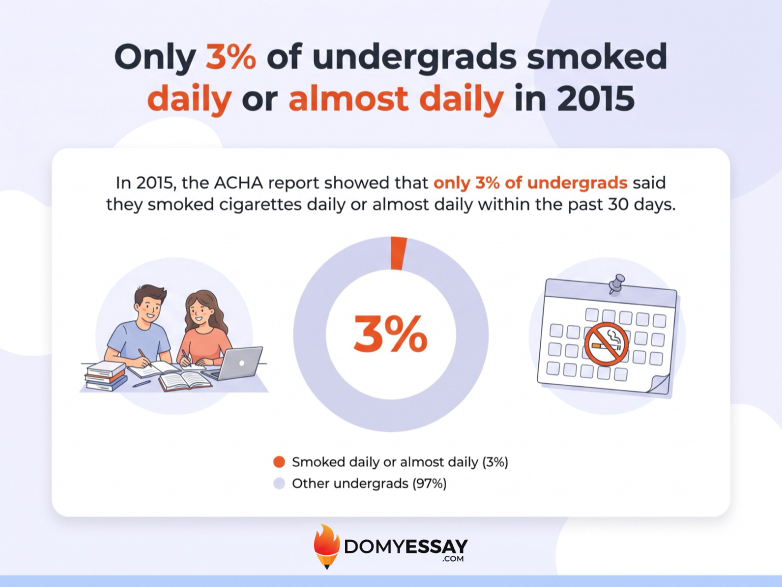
In 2015, the ACHA report showed that only 3% of undergrads said they smoked cigarettes daily or almost daily within the past 30 days. The figure rose to around 4.9% for all tobacco and nicotine products. The majority (74.9%) said they had never smoked cigarettes.
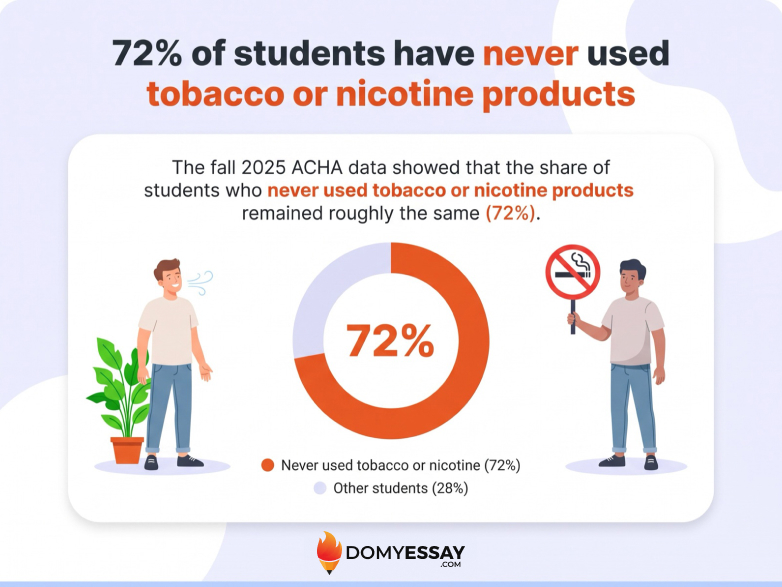
The fall 2025 ACHA data, in turn, showed that the share of students who never used tobacco or nicotine products remained roughly the same (72%). Overall, 8% of undergrads used tobacco/nicotine products daily or almost daily, and 10.6% reported smoking cigarettes within the past 90 days.
Note: Don’t take these figures as definitive proof that more college students smoke today than a decade ago. As you can see, the methodology changed: the questions asked in 2015 were different from the ones posed in 2025.
3 Risk Factors That Might Tip the Scales
People pick up the cigarette for many reasons, and students are no exception. Stress, social engagement, and substance use are three common risk factors that may drive smoking among college students.
Peer Pressure & New Social Environment
Occasional smokers among college students may use smoking as a social engagement tool: in other words, as a way to socialize and fit in. Some may start smoking because it’s “normal” among their peers or because it makes them look “cool.”
Persistent Stress & Mental Health Challenges
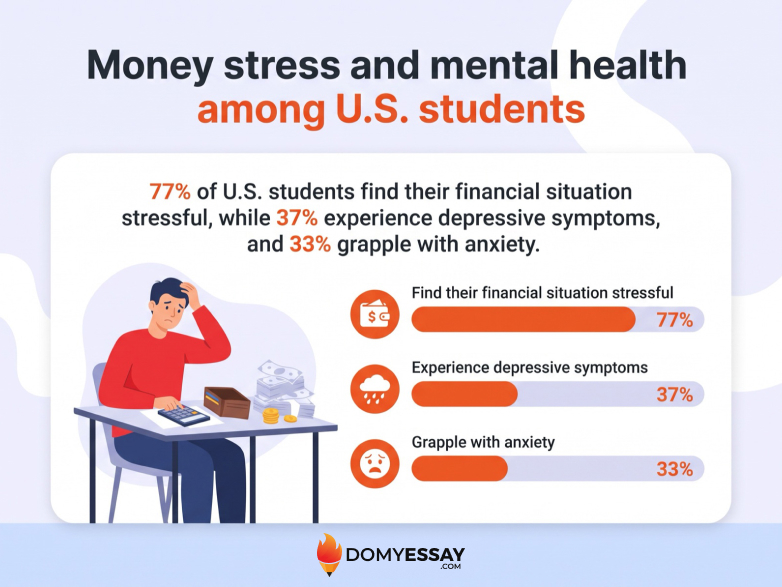
Stress is a part of student life. For one, 77% of U.S. students find their financial situation stressful, while 37% experience depressive symptoms, and 33% grapple with anxiety. Smoking can become a coping response, and stressful events have been shown to coincide with rises in first cigarette use.
Alcohol & Substance Use
Problem drinking and marijuana use are two common behavioral risks that account for substantial variation in smoking involvement. Using other nicotine products may also increase the likelihood of cigarette smoking.
What Are the Effects of Smoking on Health?
The CDC calls cigarette smoking the number one preventable cause of death, disease, and disability in the U.S. After all, smoking is associated with a plethora of health risks like:
- Cancer almost anywhere in the body, from mouth and throat to stomach and pancreas
- Type 2 diabetes
- Heart attack, heart failure, and stroke
- Lung diseases
- Negative reproductive health effects
- Eye disease (cataracts, blindness, vision loss)
These are just some of the health risks associated with smoking; the full list is a lot longer. Keep in mind that secondhand smoke also carries health risks for people exposed to it.
Yes, it takes years to develop disease, and it’s not a guarantee, but it’s easier to never start smoking than to quit it. That’s because tobacco creates physical and psychological dependence. In fact, even though 75% to 85% of smokers would like to quit, only less than 50% actually manage to do it before turning 60.
On the other hand, quitting smoking, especially earlier in life, is associated with lower mortality rates.
How Does Smoking Affect Academic Performance?
The short answer? Researchers aren’t sure about the causal link between grades and smoking. They did find a correlation between the two, however.
Smoking and lower GPAs (as well as lower life satisfaction) tend to go hand in hand, according to a study of students across 10 public colleges in Virginia. What’s more, per the same study, smoking is also associated with other risky behaviors like:
- Binge drinking
- Marijuana, cocaine, and LSD use
The bottom line is that smoking doesn’t automatically cause lower grades; students with lower grades are just more likely to smoke.
Quitting Isn’t Easy — But These 4 Tips Can Help
Whenever you smoke, nicotine activates the reward circuits in the brain. That’s what makes it so addictive, and that’s why most smokers have to try several times before quitting for good.
If you’re ready to leave the cigarette behind, here are four tips for making the transition to a smoke-free life easier:
- Pick the right time. Avoid quitting during particularly stressful times like exams. Instead, start fresh at the beginning of the term.
- Quantify smoking-related spending. How much does it cost you to keep smoking? Calculating the monthly or annual amount can be a strong argument for staying away from cigarettes.
- Pick the right strategy. You can either go “cold turkey” or gradually reduce how much you smoke. (The latter is usually better for heavy smokers.) Consider nicotine replacement therapy (patches, gum, etc.).
- Create new behaviors. If you’re a social smoker, prepare yourself to refuse a cigarette with a “No thanks, I’ve quit.” Replace smoking with a new habit (chewing gum, taking a walk, etc.).
Colleges Have a Role to Play in Prevention
Tobacco-free campus policies do help students quit. One study across five U.S. campuses examined smoking incidence before and after institutions introduced such policies. It found that after policies were put in place, students were less likely to smoke cigarettes and get exposed to secondhand smoke on campus.
Colleges and universities don’t have to go it alone if they want to transition to a smoke-free campus. Truth Initiative and CVS Health Foundation, for example, offer $20,000 in grants to community, minority-serving, and women’s colleges to help them put tobacco-free policies in place.
In Closing
Any way you cut it, smoking is dangerous to your health, and yet, the cigarette hasn’t completely disappeared from college campuses. Quitting, on the other hand, has benefits at any age, and your body feels the difference within several tobacco-free days.
Colleges have a role to play, too. Introducing tobacco-free campus policies is one way to help students to reduce or quit smoking and make sure that some never start in the first place.