
A campus in the heart of a park, plenty of programs in English, leading research opportunities… That’s what’s in the cards for you if you decide to pick Stockholm University as your alma mater.
Whether you’re dreaming of studying in Sweden in particular or just want to pursue a degree in English abroad, Stockholm University is worth considering. Here’s what it has to offer and what to expect from studying at one of the largest Scandinavian universities.
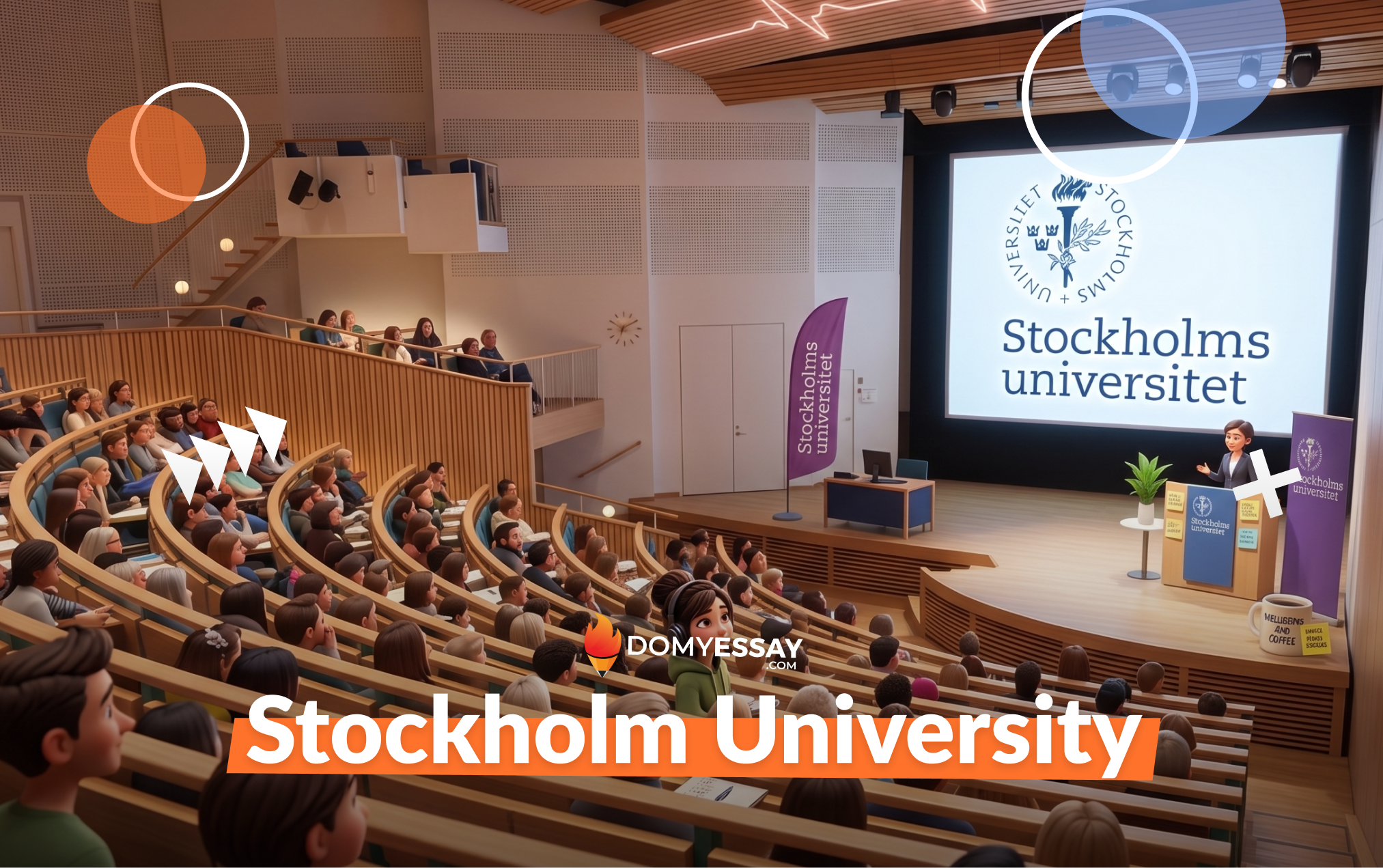
Your Quick Introduction to Stockholm University (SU)
Founded in 1878 as a college, the University of Stockholm has a rich history of conducting groundbreaking research and imparting knowledge to generations of students. Today, it’s a public research university that brings together 33,600 full-time students, most of whom explore human sciences.
Besides being one of the largest universities in Scandinavia, Stockholm University is also frequently featured in rankings like:
- THE World University Rankings 2026: #201-250 (overall), #82 (Law), #87 (Social Sciences)
- QS World University Rankings 2026: #147 (overall), #30 (Social Policy and Administration), #35 (Environmental Sciences), #38 (Sociology)
- Academic Ranking of World Universities 2025: #100 (overall), #18 (Environmental Science and Engineering), #32 (Atmospheric Science)
While social sciences account for the lion's share of the student body, it’s just one of the university’s four faculties:
- Humanities
- Law
- Natural sciences
- Social sciences
What Drives Students to Pick Stockholm University
Of course, each student has their own reasons for applying to Stockholm University. For some, studying in Sweden is enough on its own. For others, the opportunity to conduct research at the Baltic Sea Center would be a dream come true.
That said, these six perks of studying at SU come up most often when you ask students about their decision to enroll there:
- Unbeatable research opportunities, especially in natural and social sciences
- Strong international reputation, as proven by multiple rankings
- More than 100 programs taught in English, including seven bachelor’s programs
- Open academic culture and the opportunity to attend free Nobel Prize lectures
- Curricula driven by the latest research and courses taught by working researchers
- Multicultural environment with 1,600+ international students on campus and 1,000+ active exchange agreements across 50 countries
What Will You Study? Key Stockholm University Programs
Like other Scandinavian countries, Sweden ranks at the top of the EF English Proficiency Index (#8 in 2025). That translates into a tangible perk for any international student considering higher education in Sweden: you’ll come across plenty of programs taught in English.
As of writing, Stockholm University offers seven bachelor’s and 107 master’s programs taught in English. The most popular among them include:
- Environmental Science and Sustainability
- Linguistics
- Business and Management
- AI for Health
- AI and Language
- Atmospheric Sciences
As you can guess by now, Stockholm University focuses mostly on graduate studies and post-graduate research. So, if you’re in the market for a bachelor’s degree, you might be somewhat limited in your choice at SU.
What’s Stockholm University Student Life Like?
Not a fan of noisy urban areas? Then you have one more reason to go to Stockholm University! Unlike most campuses, the SU is right in the heart of the Royal National City Park. So, you’ll be spending most of your time close to nature — but not too far from Stockholm’s city center, either.
Sidenote: Stockholm isn’t a cheap place to live, but you get a higher quality of life in return. Besides, it’s decidedly a student city, with a vibrant social and cultural scene.
Student life on campus can get quite busy. The SU’s many student unions give you a chance to get involved in the big decisions, from course planning to sustainability choices. Union membership also offers many perks, including discounts for textbooks and lunches.
Finally, you’ll get a chance to mingle with fellow students at Studenthuset’s and Infocenter’s study spaces and group rooms or during the many sporting activities offered on campus.
A Word on Career & Research Opportunities
Stockholm University ranks high in graduate employability. In fact, the 2026 Global Graduate Employability University Ranking lists the SU as #108 internationally and #3 in Sweden.
As research and teaching are closely intertwined at the Stockholm University, picking it is a no-brainer if you’re shooting for becoming a researcher. But even if it’s not the case, a Swedish degree is worth a lot, both in the EU and around the world. You can also get a 12-month residence permit to find a job in Sweden after your studies.
Whether you want to combine studies with work or find a job after graduating, Stockholm University can help you do both via the MyCareer portal. This portal brings together job and internship opportunities both in Sweden and abroad. The university also has an extensive alumni network and offers career webinars.
International applicants can use our admission essay writing services to strengthen their university applications.
Interested in a Stockholm University Scholarship for International Students?
Studying at Stockholm University can get pricey for students outside the EU, EEA, and Switzerland. (EU/EEA/Swiss students don’t have to pay tuition fees.) But if you’re worried that studying at Stockholm University is way out of your price range, remember that you can fund your master’s studies with:
- Stockholm University Scholarship Scheme, which covers the whole tuition fees for especially qualified students
- Swedish Institute Scholarships, which fund tuition for women in STEM and sustainability students from select countries
- Scholarships in Arbitration Law, which cover tuition for arbitration law studies for non-EU/EEA citizens
If those options don’t meet your needs, make sure to browse the official Study in Sweden website. It lists available scholarships from universities, governments, and other organizations.
In Closing
Applying to the University of Stockholm could be your first step to building an exciting research career or putting down your roots in Sweden. Natural or social sciences, law or humanities — this university probably has a program taught in English for you.
And the best part? You’ll be learning about the latest advances in your field from actual researchers, surrounded by peers from different countries and diverse backgrounds!